Rediscovery of Lost Transit and Space - OBERMEYER Shares Insights on TOD Development in the Urban Renewal Era
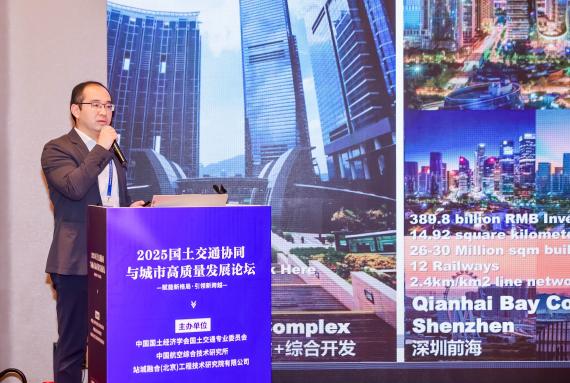
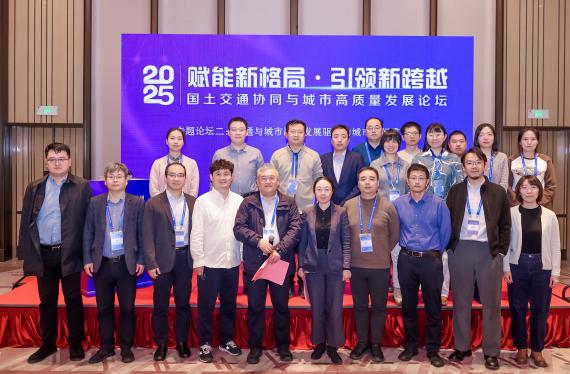
On November 29th, OBERMEYER was invited to the 2025 Territorial Transportation Coordination and High-Quality Urban Development Forum held in Beijing and delivered an insightful speech on relevant topics. Hundreds of authoritative experts and industry elites from government departments, research institutions and leading enterprises gathered for the event. Six thematic sessions were set up, focusing on key areas such as station-city integration in the era of stock renewal, urban space restructuring driven by transportation-urban integration, coordinated planning of low-altitude economy and territorial transportation, construction of integrated transportation networks in metropolitan areas, and integration of railway culture and tourism, exploring practical methods from multiple perspectives.
As an important speaker at the session "Urban Space Restructuring Driven by Transportation-Urban Integration", Mr. He Jianfeng, Director of Urban Design and Smart Transportation at OBERMEYER, shared the topic "Rediscovery of Lost Transit and Space - Thoughts on TOD development in Urban Renewal Era".
The presentation noted that amid slowing population growth, stricter rail transit construction regulations, and mounting pressure to subsidize public transportation, China’s TOD development has shifted from incremental expansion to stock renewal. "Lost spaces” such as railway stations and bus terminals — are emerging as critical potential areas for urban quality enhancement.
He emphasized that through small-scale, low-intensity, and phased mixed-use development, traditional transportation nodes can be upgraded into urban micro-hubs integrating transportation, daily life, and services. Taking practices such as Shanghai Lianhua Road Station, Quadrio Shopping Station in Prague, Smíchov South City in Prague (link), Chengdu Jilong 2nd Street as examples, supplementing community services, introducing affordable housing and convenient commerce can effectively boost regional vitality and establish a sustainable operation model.
Furthermore, future TOD projects should prioritize walk-friendly environments and seamless multi-modal connection. Advanced through collaboration of governments, transportation operators, and social capital, these projects can leverage smart logistics to unlock resource value — ultimately delivering a win-win scenario for public welfare, commercial value, and urban livability. This approach offers a practical roadmap for the deep integration of transportation and urban spaces.
The Territorial Transportation Professional Committee of the China Society of Territorial Economists is a branch approved by the China Society of Territorial Economists on December 2, 2019. Its parent organization, the China Society of Territorial Economists, founded in 1981, is a national academic non-profit social group registered with the Ministry of Civil Affairs and a component of the China Association for Science and Technology. It promoted policy research and industry standardization in fields such as integrated territorial transportation development and TOD practice.
As a member of this committee, OBERMEYER participates in industry discussions and innovative practice exchanges. Its sharing at this forum is not only an active response to the committee's work but also demonstrates the company's professional accumulation and industry responsibility in the TOD field.